The Safest T-Shirt Fabric for Kids' Skin (What to Check Before You Buy)
Published 13 Jul 2026 · Updated 21 Jul 2026
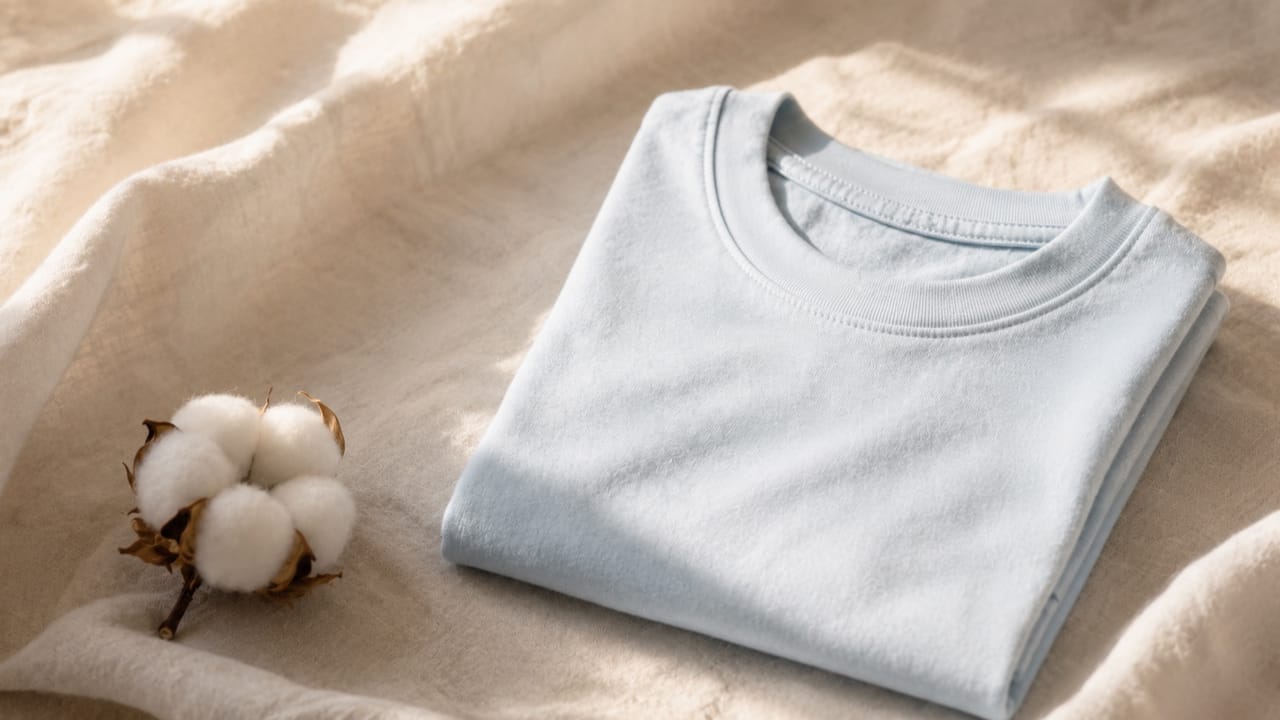
If your child tugs at their collar, scratches the back of their neck, or refuses a top for reasons they can't explain — it's often not fussiness. Children's skin is thinner and more reactive than an adult's, and a lot of kids' clothing is made without that in mind.
Quick answer: For most children, soft, breathable 100% cotton is the safest everyday t-shirt fabric — natural, low-irritation, and it doesn't trap heat like synthetics. But the most common irritant isn't the fabric at all: it's the stiff sewn care-label at the neck. Look for a printed (heat-transfer) label and, ideally, an OEKO-TEX Standard 100 certification, which limits harmful substances in the fabric.
Key takeaways
- Soft, breathable cotton is the safest everyday fabric for most children's skin — it's natural, breathable, and low-irritation.
- The most common irritant isn't the fabric at all — it's the scratchy sewn care-label tag at the back of the neck.
- Watch for harsh dyes, rough seams, and synthetic blends that trap heat and sweat.
- VastraCore kids' tees use soft cotton, a heat-transfer inner label (no sewn tag), and colour locked to Delta-E < 1.5.
Why cotton is the safe default
For everyday wear, soft 100% cotton is hard to beat for children. It's a natural fibre, it breathes (so sweat and heat don't get trapped against the skin), and it's far less likely to cause the reactions that synthetics sometimes do. A denser, well-finished cotton — around 230 GSM — is also sturdy enough to survive the playground and the wash without going rough.
The detail most parents miss: the tag
Here's the thing almost no product page tells you: the number-one source of "this top is itchy" complaints is the stiff care-label sewn into the back of the neck. It rubs exactly where kids' skin is most sensitive. Cutting it out helps, but often leaves a scratchy stub.
The real fix is a heat-transfer inner label — the care info is printed directly onto the fabric, so there's no tag to scratch or cut out at all. Every VastraCore kids' tee is made this way.
What to check before you buy
- Fabric: soft, breathable cotton — avoid heavy synthetic blends for daily wear.
- Certification: an OEKO-TEX Standard 100 label means the textile was tested against 1,000+ harmful substances (formaldehyde, azo dyes, heavy metals). Its strictest tier — Product Class I — is set specifically for babies and toddlers.
- The tag: heat-transfer/printed label, not a sewn-in tag.
- Colour: does the colour bleed or fade? Look for brands that colour-test (we lock to Delta-E < 1.5).
- Seams: smooth, flat seams that won't rub.
- Shrinkage: pre-shrunk cotton, so it still fits after a hot wash.
Shop kids' tees built for sensitive skin →
This is general guidance, not medical advice. If your child has persistent skin irritation, a rash, or a suspected allergy, check with a paediatrician or dermatologist.
FAQ
What is the safest fabric for a child's sensitive skin?
Soft, breathable 100% cotton is the safest everyday choice for most children — natural, breathable, and low-irritation. Avoid heavy synthetic blends for daily wear, and choose tees without a scratchy sewn neck tag.
Why does my child say their t-shirt is itchy?
Most often it's the stiff care-label sewn into the back of the neck rubbing against sensitive skin — not the fabric itself. A tee with a printed heat-transfer label removes the problem entirely.
Is 100% cotton better than a cotton blend for kids?
For everyday wear and sensitive skin, 100% cotton is usually the better choice — it breathes better and is less likely to irritate than synthetic-heavy blends.
Sources
- Textile harmful-substance testing and child-safety tiers (Product Class I for babies and toddlers) — OEKO-TEX Standard 100